

How to Quit a Toxic Job Without Another Job: A Practical Exit Plan
Standard career advice is unyielding: never leave a job until you have signed a new offer letter.
In a normal work environment, that rule makes sense. But in an intensely toxic workplace—marked by chronic psychological intimidation, unpredictable management retaliation, unmonitored 70-hour weeks, or severe burnout—staying until you secure a new role is not always possible.
When a toxic workplace is seriously affecting your wellbeing and making it difficult to function or plan your next move, staying indefinitely may not be sustainable.
Quitting without a safety net should never be an impulsive, dramatic gesture. If you must leave without another job lined up, execute the departure with an operational safety plan that protects your finances, preserves your professional references, and shields your resume.
Step 1: The 4-Pillar Pre-Exit Audit
Before submitting your resignation letter, spend one focused weekend evaluating your personal safety floor:
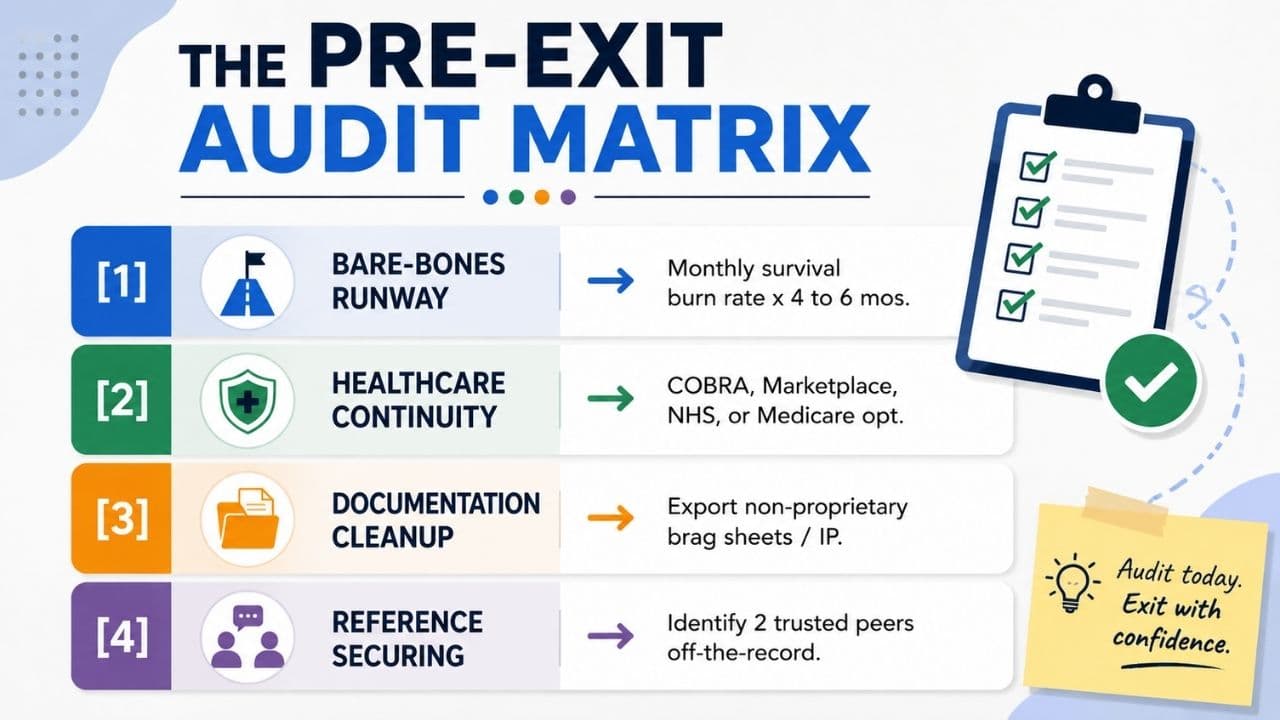
1. Calculate Your "Survival Burn Rate"
Do not calculate your budget using your current spending lifestyle. Strip your monthly expenses down to pure non-negotiables: rent/mortgage, baseline groceries, utilities, minimum debt payments, and basic healthcare.
Estimate your runway based on your essential monthly expenses and how long you realistically expect your job search to take. The right emergency-fund target can vary significantly by country, industry, income, and personal circumstances.
Top search terms
Workplace Wellness
Career Growth
Job Search
2. Verify Healthcare and Benefit Coverage
In the US: Research COBRA costs versus Affordable Care Act (ACA) Special Enrollment periods (a voluntary job loss qualifies as a life event).
In the UK, Canada, & Australia: Ensure private supplemental coverage (dental, optical, prescription plans) is mapped out before your corporate benefits end.
3. Secure Non-Proprietary Proof of Work
Download your personal performance reviews, clean templates you authored, and non-confidential project metrics before your company laptop access is revoked. Never take proprietary client lists or trade secrets, but do keep a record of your achievements and data points.
Step 2: The "Quiet Resignation" Bridge Strategy
If your runway is short (under three months), avoid quitting tomorrow. Instead, shift into Emotional Detachment Mode for 30 to 45 days:
Decline optional emotional labor: Stop volunteering for uncredited committees, internal initiatives, or informal mentoring.
Work strictly to your contract hours: Log off at the designated end of your workday.
Convert work time into job-search energy: Treat your remaining weeks as a transition period to bank extra cash while building your application pipeline.
Step 3: Drafting a Neutral Resignation Letter
When leaving a toxic manager, do not attempt an emotional exit interview or write a detailed grievance letter. Toxic managers rarely accept responsibility; submitting written complaints during a standard resignation often leads to immediate lockouts or negative backdoor references.
Keep your written resignation concise and strictly professional:
Formal Resignation Template
Dear [Manager Name],
Please accept this letter as formal notification that I am resigning from my position as [Job Title] at [Company Name]. My final day of work will be [Date, adhering to standard 2-week or contractual notice period].
During this transition period, I will document my ongoing tasks and ensure all client files are organized for a clean handoff to the team.
I appreciate the opportunities I’ve had during my time with the company and wish the team continued success.
Sincerely,
[Your Name]
Step 4: Framing the Exit in Future Interviews
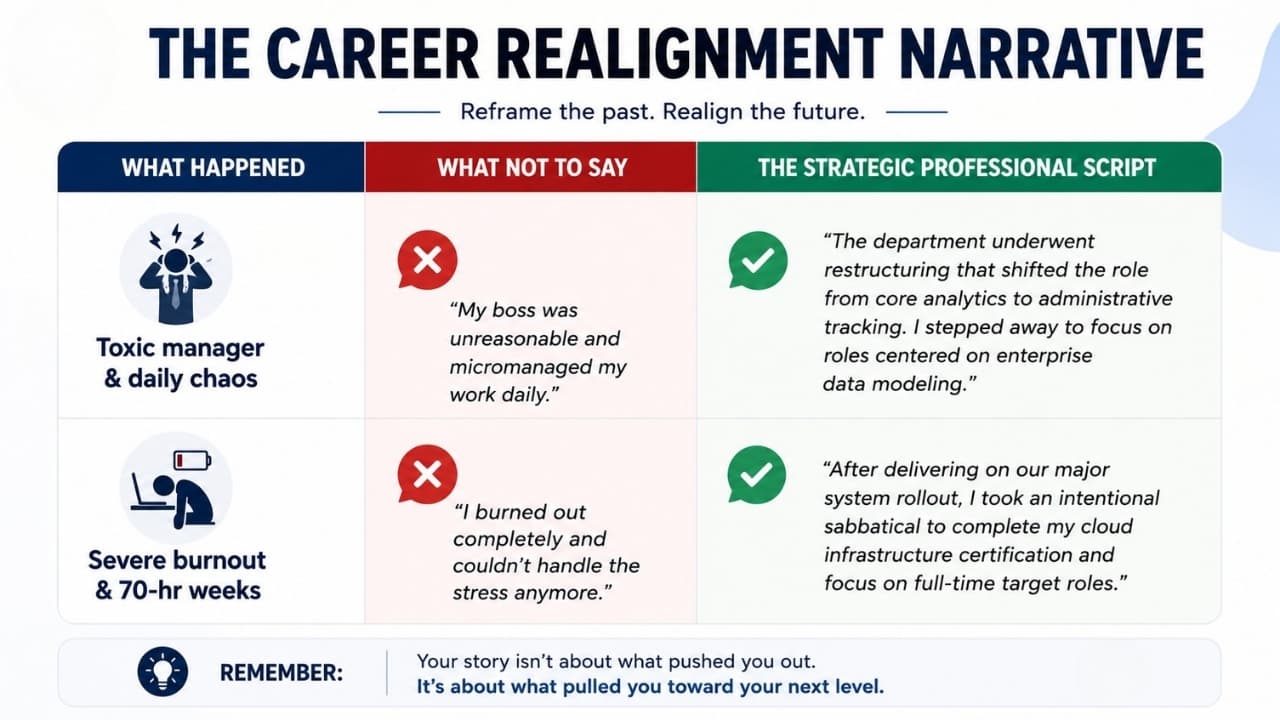
When you start interviewing, recruiters will ask why you left your previous role without a new position in place. Never criticize your former manager or complain about workplace toxicity; doing so can raise unnecessary concerns about past workplace conflict.
Use the Career Realignment Narrative:
What to Do Next
Conduct a Bare-Bones Budget Audit: Calculate your exact monthly survival burn rate this evening.
Identify Two Safe References: Discreetly connect with a former colleague or mentor outside your direct reporting line who can speak to your work ethic.
Set Your Target Exit Date: Pick a definitive date on the calendar. Having a clear deadline helps reduce daily workplace anxiety and gives you a structured transition timeline to work toward.
Key Takeaways
Prioritize safety over pride: Leaving without an offer is a calculated risk management decision when work conditions harm your health.
Know your survival burn rate: Base your financial runway on essential living costs rather than your current monthly expenditure.
Maintain a neutral resignation: Keep resignation letters brief, polite, and free of emotional grievances to protect future references.
Never badmouth former employers: In future interviews, frame your departure around intentional career direction, upskilling, and business priorities.
Secure clean records before leaving: Export non-confidential project metrics, performance notes, and your personal contact lists before turning in your hardware.