
Feeling Overwhelmed at Work? The 4-Step Immediate De-escalation Protocol
Have you ever had a day when you had plenty of things to do, but you couldn't bring yourself to do any of them?
You keep looking at your phone.
You open your laptop.
You check your messages.
You make a to-do list.
And somehow, hours pass without getting much done.
Then comes the guilt.
“Why am I so lazy?”
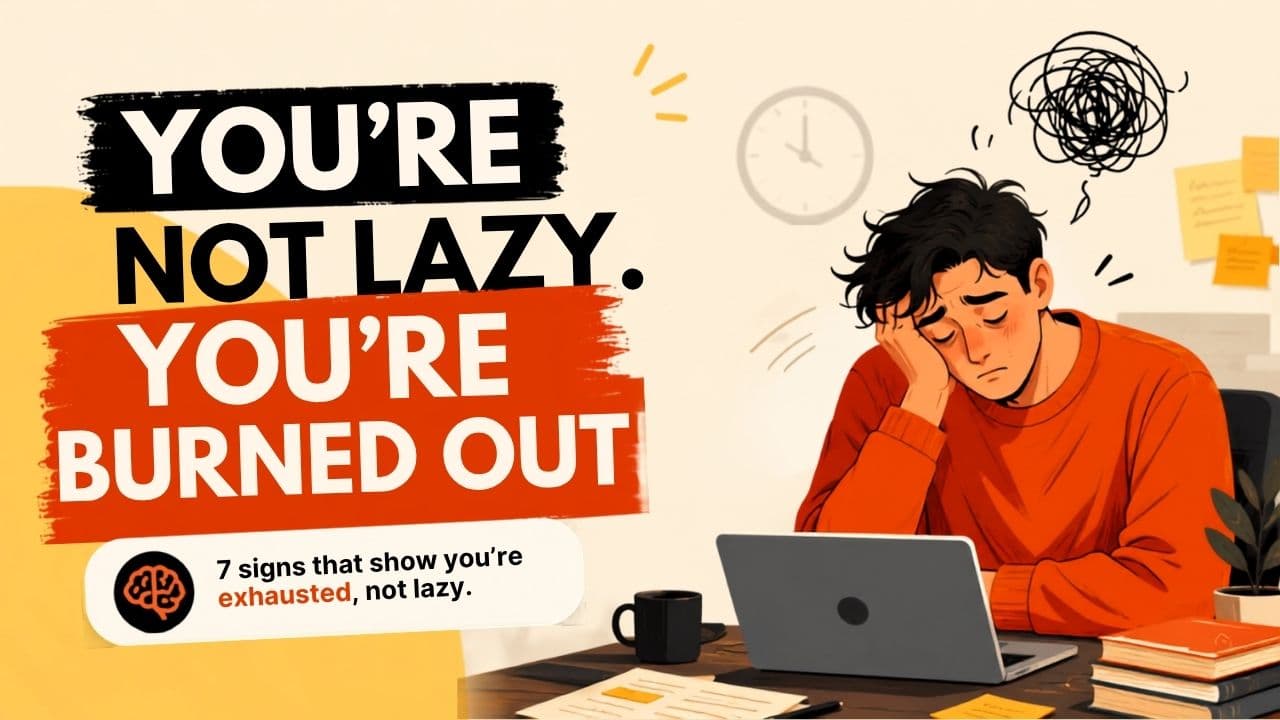
But what if laziness isn't actually the problem?
Sometimes, what looks like laziness is simply mental and emotional exhaustion.
You may not need another productivity app or another motivational video.
You may need to slow down.
Here are seven signs worth paying attention to.
1. Even Small Tasks Feel Exhausting
When you're burned out, simple things can suddenly feel much harder than they should.
Replying to an email feels like a project.
Cleaning your desk feels overwhelming.
Starting a small assignment takes far more effort than expected.|
The task itself hasn't necessarily become harder.
You may simply have less energy available for it.
That's an important difference.
If you regularly find yourself thinking, “I know this is easy, so why can't I just do it?”, it may be worth looking at your overall workload and recovery time instead of immediately blaming yourself.
2. You Keep Procrastinating on Things You Normally Enjoy
Everyone procrastinates sometimes. But there's a difference between putting off something boring and avoiding almost everything.
Maybe you used to enjoy learning new things. Now you can't concentrate on a five-minute video. Maybe you used to enjoy working on creative projects.
Now even opening the project feels exhausting.
When your motivation drops across several areas of life, don't automatically label yourself lazy.
Sometimes your brain is simply asking for a break.
3. You Feel Tired Even After Sleeping
This can be one of the most frustrating experiences.
You sleep.
You wake up.
And somehow you're still exhausted.
You start the day already feeling behind.
Then you rely on coffee, scrolling, or constant stimulation to get yourself moving. Poor sleep can obviously have many causes, so persistent or severe fatigue shouldn't simply be assumed to be burnout.
But if you're constantly pushing yourself without enough recovery, exhaustion can become part of your normal routine.
And that's a problem.
4. Your Concentration Has Become Terrible
You sit down to work.
Five minutes later, you're checking your phone.
You return to the task.
Then another notification appears.
Soon you're jumping between five different things without finishing any of them.
Sometimes distraction is just a habit.
But prolonged stress and exhaustion can also make it much harder to focus.
Instead of saying:
“I have no discipline.”
Try asking:
“What has been draining my attention lately?”
That's a much more useful question.
5. You Feel Guilty When You're Not Being Productive
This one is easy to miss.
You finally sit down to relax.
But instead of enjoying the break, you think:
“I should be working.”
You watch a movie and feel guilty.
You take an afternoon off and feel guilty.
You sleep longer than usual and feel guilty.
Eventually, even rest starts feeling like something you have to earn.
That's not a healthy relationship with productivity.
Rest isn't the opposite of productivity.
It's part of being able to function well.
6. Everything Starts Annoying You
When you're exhausted, your patience can disappear.
A small message irritates you.
Someone asking a simple question annoys you.
A minor problem feels much bigger than it normally would.
You might even notice yourself becoming less patient with people you care about.
That doesn't automatically mean you're becoming a bad person.
Sometimes you're simply running on empty.
When your emotional battery is low, small things can feel much heavier.
7. You Keep Saying “I'll Start Tomorrow”
Tomorrow becomes Monday.
Monday becomes next week.
Next week becomes next month.
You keep making plans, but you can't seem to start.
And every time you don't follow through, you feel worse about yourself.
This creates a frustrating cycle:
Low energy → procrastination → guilt → more stress → even lower energy.
Breaking that cycle usually requires something more realistic than telling yourself to “work harder.” Start smaller.
So, Are You Actually Lazy?
Maybe.
But don't make that conclusion too quickly.
Everyone has periods when they're unmotivated.
That's normal.
The important thing is to notice patterns.
If you're consistently exhausted, struggling to concentrate, losing interest in things you normally enjoy, or feeling overwhelmed by everyday responsibilities, it's worth taking the situation seriously rather than simply criticizing yourself.
And remember: burnout isn't something you can diagnose yourself from a blog post. Persistent symptoms can have many possible causes, and if they're significantly affecting your daily life, talking with a qualified professional is a better move than trying to push through indefinitely.
What Can You Do When Everything Feels Too Much?
Don't try to completely rebuild your life in one weekend.
Start with the basics.
Take One Real Break
Not a break where you scroll through 40 short videos.
Actually step away.
Go outside.
Sit somewhere quiet.
Talk to someone.
Give your brain a chance to stop processing information.
Reduce Your To-Do List
If you've written down 25 things, don't expect yourself to finish everything.
Choose the three things that actually matter today.
Everything else can wait.
Start With Five Minutes
Don't tell yourself:
“I have to finish this.”
Tell yourself:
“I'll work on it for five minutes.”
Starting is often harder than continuing.
Stop Comparing Your Energy to Someone Else's
You don't know what someone else's day looks like behind the scenes. Someone may appear incredibly productive while dealing with completely different circumstances.
Your goal isn't to match someone else's pace. It's to find a pace you can actually maintain.
The Difference Between Rest and Avoidance
There's an important distinction here.
Rest helps you recover.
Avoidance usually makes you feel worse.
If you spend an hour doing something enjoyable and come back feeling refreshed, that's probably useful downtime.
If you spend three hours endlessly scrolling while thinking “I should be working,” you may finish the break feeling even more stressed.
The answer isn't necessarily more discipline.
Sometimes it's better boundaries around both work and rest.
You Don't Have to Earn the Right to Rest
This might be the most important thing to remember.
You don't have to finish every task before you're allowed to stop.
You don't have to be exhausted before you're allowed to sleep.
You don't have to reach your breaking point before you're allowed to take a break.
Productivity isn't about squeezing every possible minute out of your day.
It's about being able to keep going without destroying your energy in the process.
Final Thought
The next time you catch yourself saying:
“I'm just lazy.”
Pause for a moment.
Ask yourself:
“Am I actually lazy, or am I completely exhausted?”
The answer could change what you do next.
Instead of attacking yourself, look at your workload.
Instead of demanding more motivation, look at your recovery.
Instead of trying to become productive overnight, start with one small thing.
Because sometimes the solution isn't pushing harder.
Sometimes you need to stop, breathe, and give yourself a chance to start again.