
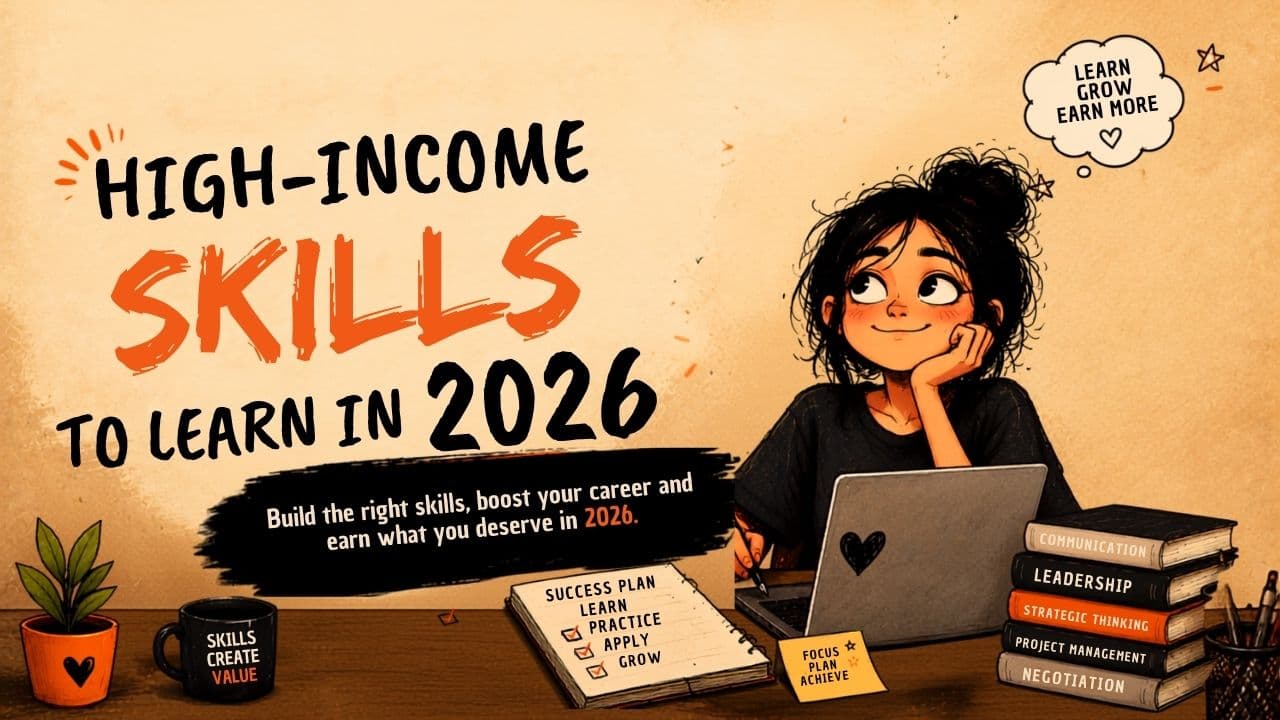
A high salary is rarely the result of knowing one impressive skill. The professionals who consistently move into better roles, higher pay and greater responsibility usually combine several skills that make them valuable to a business. In 2026, that combination matters more than ever.
Technology is changing how work gets done, but employers still need people who can analyse problems, communicate clearly, make good decisions and turn ideas into results. The World Economic Forum continues to rank analytical thinking, resilience, leadership and creative thinking among the most important skills for the modern workforce, while LinkedIn's 2026 research highlights growing demand for collaboration, stakeholder communication, business development and strategic skills. So, which professional skills are worth developing?
1. Analytical Thinking and Business Decision-Making
Being able to collect information is useful. Knowing what to do with it is much more valuable.
Strong professionals don't simply look at reports, spreadsheets or dashboards. They ask:
What is actually happening?
Why is it happening?
What could happen next?
What should we do about it?
What will the decision cost or improve?
For example, a marketing professional shouldn't only report that website traffic increased. A stronger professional can explain whether that traffic generated qualified leads, increased sales or improved customer acquisition.
That's the difference between reporting information and creating business value.
If you want to build this skill, start learning basic data analysis, financial concepts, forecasting and problem-solving.
2. Communication That Gets Things Done
Good communication is not about using complicated words. It's about making things clear. This becomes especially important when working with remote teams, international colleagues, managers and clients.
Instead of sending a long message saying:
“I wanted to discuss some possible issues with the upcoming campaign.”
A stronger message might say:
“The campaign is ready, but we need approval on the budget before Thursday. I recommend option B because it gives us wider reach without increasing the total spend.”
The second version is easier to understand and easier to act on. Develop the ability to write clear emails, reports, proposals, presentations and project updates.
People who can turn complicated information into simple decisions often become highly valuable inside an organisation.
3. Leadership Without Waiting for a Manager Title
You don't need a management title to develop leadership skills. Leadership can start with taking ownership.
If a project is unclear, help create structure.
If your team has a recurring problem, help solve it.
If a new employee needs support, teach them what you know.
If something goes wrong, focus on finding the solution instead of finding someone to blame. These behaviours demonstrate something employers care about: reliability and ownership. Over time, professionals who consistently take responsibility for outcomes are often better positioned for senior roles.
4. Cross-Functional Collaboration
Modern work rarely stays inside one department. A marketing project may involve sales, design, finance, technology and customer support. A product launch may require coordination between product managers, engineers, legal teams and marketing. That means knowing your own job isn't enough. You also need to understand how your work affects other teams.
Learn how to:
Manage stakeholders
Resolve disagreements
Explain your priorities
Understand different business functions
Coordinate projects
Keep people aligned around outcomes
This skill becomes particularly valuable as you move into senior positions.
5. Project and Workflow Management
One of the easiest ways to become more valuable is to become better at getting work from idea to completion.
That means understanding:
Planning → Priorities → Resources → Execution → Review → Improvement
You don't necessarily need to become a certified project manager. Start by learning how to break large projects into smaller tasks, identify dependencies, manage deadlines and communicate risks early. Professionals who can bring order to complicated projects are useful in almost every industry.
6. Negotiation and Persuasion
Negotiation isn't only for salespeople. You negotiate when asking for a raise, discussing deadlines, managing budgets, resolving disagreements or trying to get support for an idea. Strong negotiators understand what the other person needs.
Instead of entering a conversation thinking:
“How do I get what I want?”
Ask:
“What does the other person need, and how can we create an outcome that works for both sides?”
Learning to present evidence, handle objections and communicate value can have a direct impact on your career.
7. Adaptability and Continuous Learning
One skill that becomes more valuable every time the workplace changes is the ability to learn. A skill that is valuable today may become less important tomorrow. That doesn't mean you should chase every new trend.
It means you should become comfortable learning new tools, processes and responsibilities when your industry changes.
The World Economic Forum expects a significant share of workers' core skills to change by 2030, making reskilling and continuous development increasingly important. The best professionals don't try to know everything. They know how to learn what they need next.
8. Strategic Thinking
Strategic thinking is the ability to look beyond today's task.
Instead of asking:
“What do I need to finish?”
Start asking:
“Why are we doing this, and what result are we trying to create?”
A strategic employee understands priorities, risks, resources and long-term consequences. For example, instead of simply completing ten marketing campaigns, a strategic marketer asks which campaigns actually contribute to revenue and which should be stopped. That mindset separates task execution from professional leadership.
How to Build Your High-Income Skill Stack
You don't need to master all eight skills at once.
Start with three.
Step 1: Choose Your Career Direction
Decide what role or salary level you want next.
Step 2: Identify Your Skill Gaps
Look at real job descriptions for that position. Note which skills appear repeatedly.
Step 3: Build One Skill at a Time
Spend the next 30–60 days deliberately practising one important skill. Don't just watch courses. Apply what you learn to real projects.
Step 4: Create Proof
Keep examples of projects, improvements, presentations, reports or business results that demonstrate your ability. A certificate says you completed training. A strong project shows what you can actually do.
Step 5: Review Your Progress
Every few months, ask:
“Am I becoming more useful, more independent and more capable of solving valuable problems?”
If the answer is yes, you're building professional leverage.
Final Takeaway
There is no single “magic skill” that guarantees a high salary in 2026. The strongest career advantage comes from combining skills.
Learn to analyse problems, communicate clearly, work across teams, take ownership, manage projects and think strategically. Then add the technical skills specific to your industry. That combination is much harder to replace than technical knowledge alone.
Your goal shouldn't simply be to collect more skills. It should be to become the person who can take a difficult problem, understand it, communicate it clearly and help turn it into a measurable result.
That's the kind of professional value that can move a career forward.
Frequently Asked Questions
What are the best high-income skills to learn in 2026?
Analytical thinking, leadership, communication, strategic thinking, project management, negotiation, business understanding and adaptability are valuable across many professional roles.
Which skill should I learn first?
Start with the skill most closely connected to the role you want next. Review several job descriptions and identify the abilities employers repeatedly request.
Do I need technical skills to earn a high salary?
Technical skills can be highly valuable, but combining technical knowledge with communication, business understanding and problem-solving can make your expertise more useful.
How can I prove that I have these skills?
Build real projects, document measurable results, create case studies and keep examples of work that demonstrate your contribution.
Can professional skills help with career growth?
Yes. Skills such as communication, leadership, strategic thinking and cross-functional collaboration become increasingly important as professionals take on greater responsibility.