

How to Prepare for an AI-Powered Job Interview Without Sounding Robotic and Stand Out to Recruiters
Preparing for an AI video interview or automated screening? Learn how to prepare for an AI-powered job interview, avoid robotic answers, and stand out in 2026.
The job interview landscape has shifted dramatically. Today, top companies don't just use hiring managers to evaluate candidates—they rely on AI-driven video screening, automated skill assessments, and AI candidate matching platforms.
On the flip side, candidates are turning to tools like ChatGPT and Gemini to prep answers, mock-interview, and research employers.
This creates a brand-new trap: Over-preparing with AI until you sound completely scripted.
If your answers sound like a generated essay, hiring managers (and automated screening software) will tune you out. Here is your ultimate guide on how to ace an AI-powered job interview in 2026 while staying authentically human.
1. Decode the Interview Format Early
Before you start practicing, clarify the exact type of hiring process you're stepping into:
One-Way AI Video Interview (Asynchronous): You record video responses to on-screen prompts with strict time limits (e.g., HireVue or Spark Hire).
Automated Skill & Aptitude Assessment: Interactive tasks or coding/writing challenges graded by an algorithm.
AI-Assisted Live Interview: A human interviewer conducts the call while AI transcribes, flags key skills, or suggests follow-up questions in real time.
Knowing whether you are speaking to a person, an algorithm, or a recorded buffer completely dictates how you should structure your pacing and energy.
2. Ditch Memorized Scripts—Build "Story Blocks" Instead
Memorizing full paragraphs generated by AI is the fastest way to sound robotic. If an interviewer tweaks the question slightly, a memorized answer will collapse.
Instead of scripting full sentences, build reusable story blocks using the CAR Framework (Context, Action, Result):
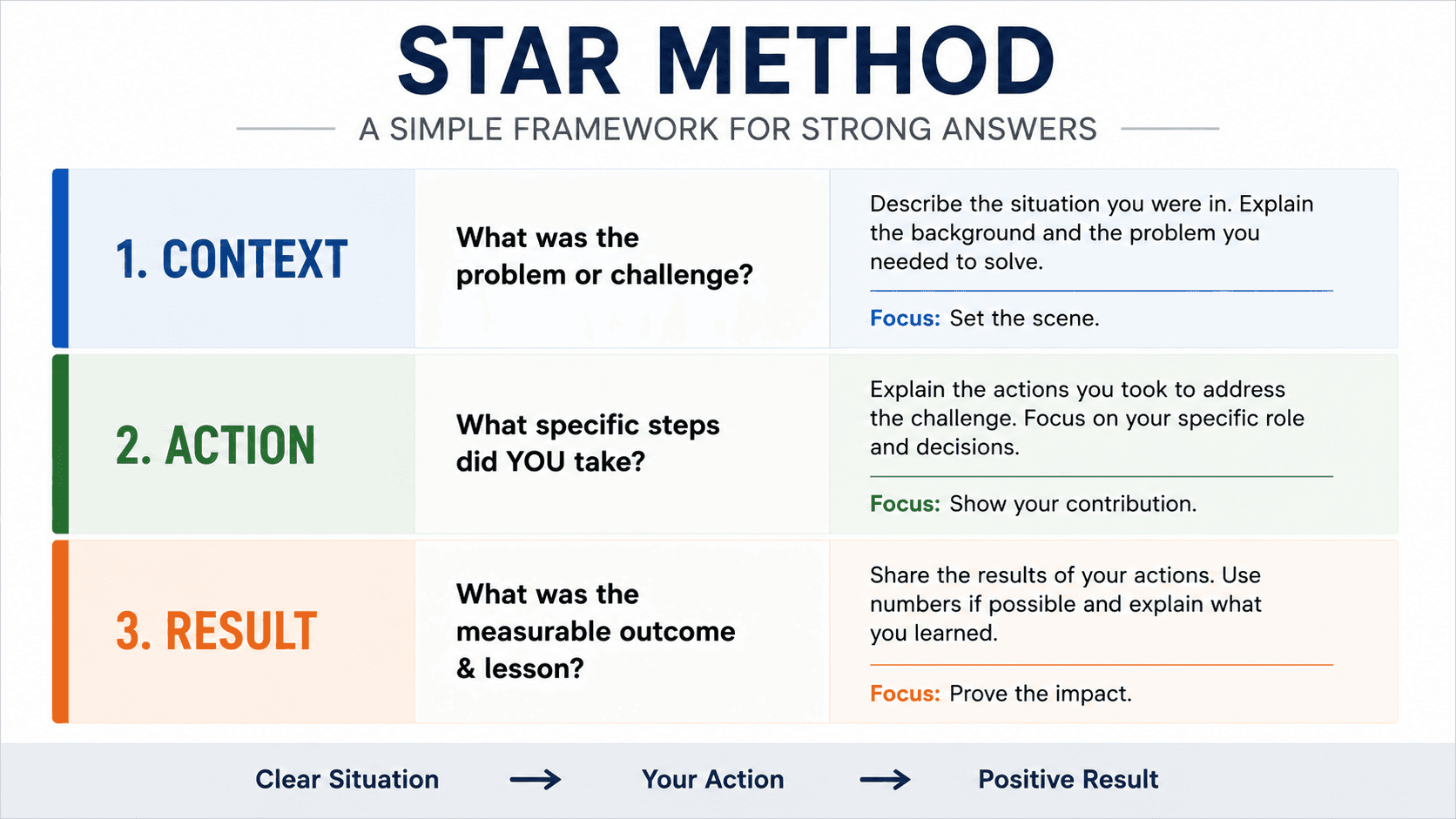
Story Ideas to Keep Ready:
A high-stakes problem you solved under pressure.
A time you made a mistake and how you corrected it.
A situation where you had to learn a complex tool quickly.
A project where you managed a disagreement or team conflict.
3. Train with AI as an Interviewer, Not a Scriptwriter
AI can be an extraordinary interview coach—if you use it correctly.
Wrong Way:
"Write a perfect answer for why I should be hired as a project manager."
Right Way:
"Act as a hiring manager for a Senior Project Manager role. Ask me 5 tough behavioral questions one by one, evaluate my answers, and highlight where I sound vague or robotic."
Use AI to simulate real pressure, stress-test your communication, and expose gaps in your explanations.
4. Prepare for Deep-Dive Follow-Up Questions
AI resume screeners and experienced recruiters look for detail. A surface-level answer won't cut it anymore.
If you claim: "I optimized our team's digital marketing workflow," be ready for consecutive drill-down questions:
Which specific tools or software did you implement?
What resistance did you face from the team, and how did you overcome it?
What was the exact percentage increase in productivity?
If an AI tool helped refine your resume, ensure you can explain every single metric, bullet point, and tool on that page without stuttering.
5. Master One-Way AI Video Interview Mechanics
If you are taking an asynchronous (recorded) AI video interview, technical presentation matters just as much as your spoken content.
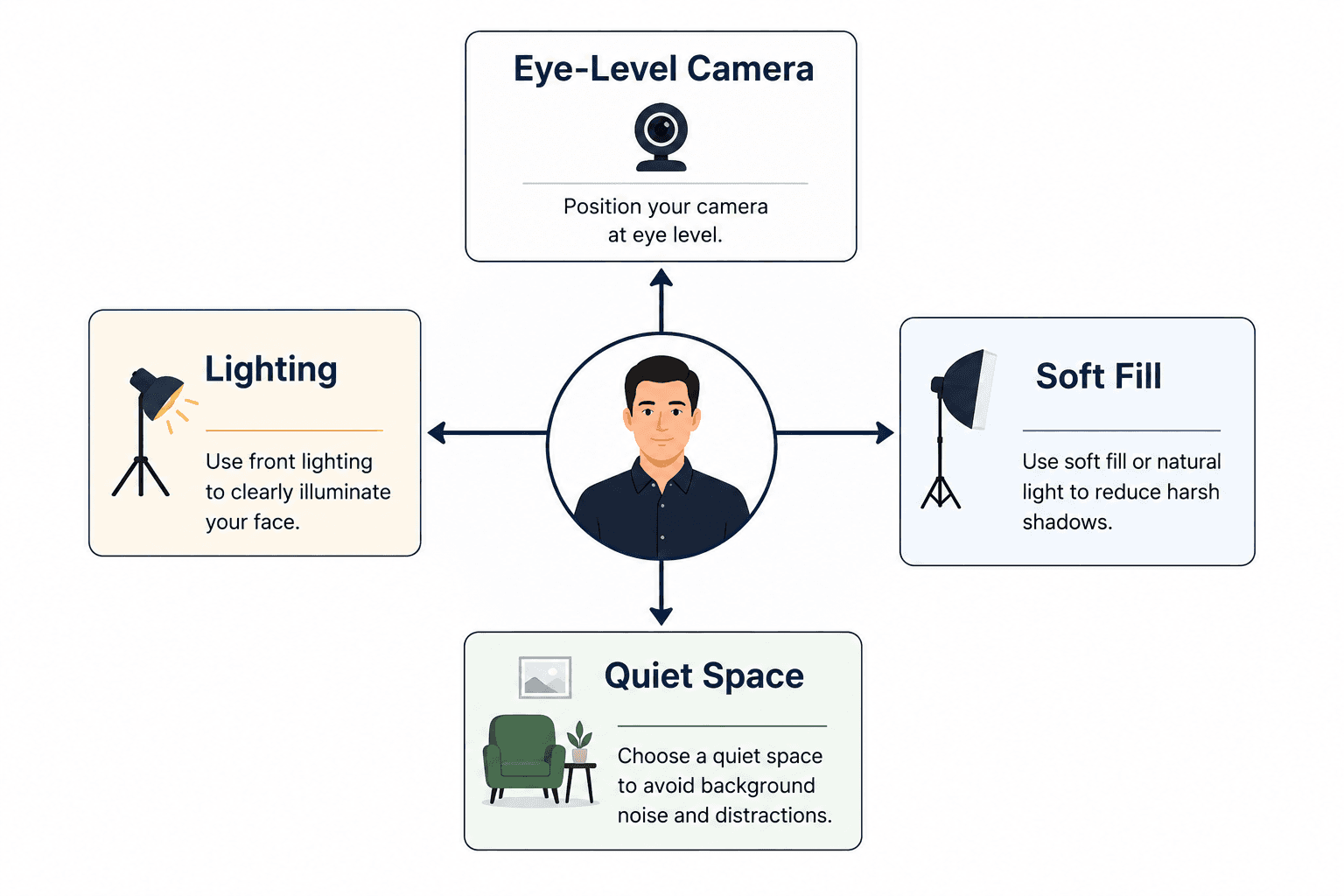
Eye Contact Hack: Place a small sticky note right next to your camera lens. Look at the camera, not at your own image on the screen.
Pacing & Pauses: Take a 2-second breath before answering. Algorithms and human screeners both evaluate clarity, tone, and confidence over speed.
Lighting & Audio: Ensure your primary light source is in front of you, not behind you, and use a dedicated microphone or quality headset to eliminate room echo.
6. Strip Away Corporate Buzzwords
If you wouldn't say a phrase in a normal professional conversation, do not say it in an interview.
Robotic AI Jargon Natural Human Equivalent "I possess cross-functional strategic synergy." "I bring design and development teams together to meet launch deadlines." "I am a dynamic, highly motivated individual." "I enjoy taking ownership of complex projects from start to finish." "I leveraged data-driven insights to maximize ROI." "I analyzed our monthly campaign metrics to lower customer acquisition costs by 15%."
7. Turn the Tables with Strategic Questions
An interview is a two-way street. Asking insightful questions proves that you are evaluating the company's culture and operational readiness, not just begging for a job.
High-Impact Questions to Ask:
"What does absolute success look like in this role over the first 90 days?"
"What is the biggest operational bottleneck the team is currently trying to solve?"
"How does the team balance automated tools and AI with human decision-making in day-to-day work?"
8. Post-Interview Audit: The 5-Minute debrief
Improvement happens between interviews. Immediately after closing the call or ending the recording, write down:
Questions that caught you off guard.
Answers where you felt you rambled or sounded unnatural.
Technical or platform issues you experienced.
Feed those tough questions back into your AI mock practice setup to refine your responses for the next round.
Summary Checklist
Know the format: Identify if it's live, recorded, or a skill assessment.
Focus on CAR stories: Memorize frameworks, not exact sentences.
Verify your resume claims: Be ready to back up every line with context.
Keep language plain: Replace inflated corporate buzzwords with clear metrics.
Practice on camera: Record your mock sessions to check body language, eye contact, and vocal clarity.
